
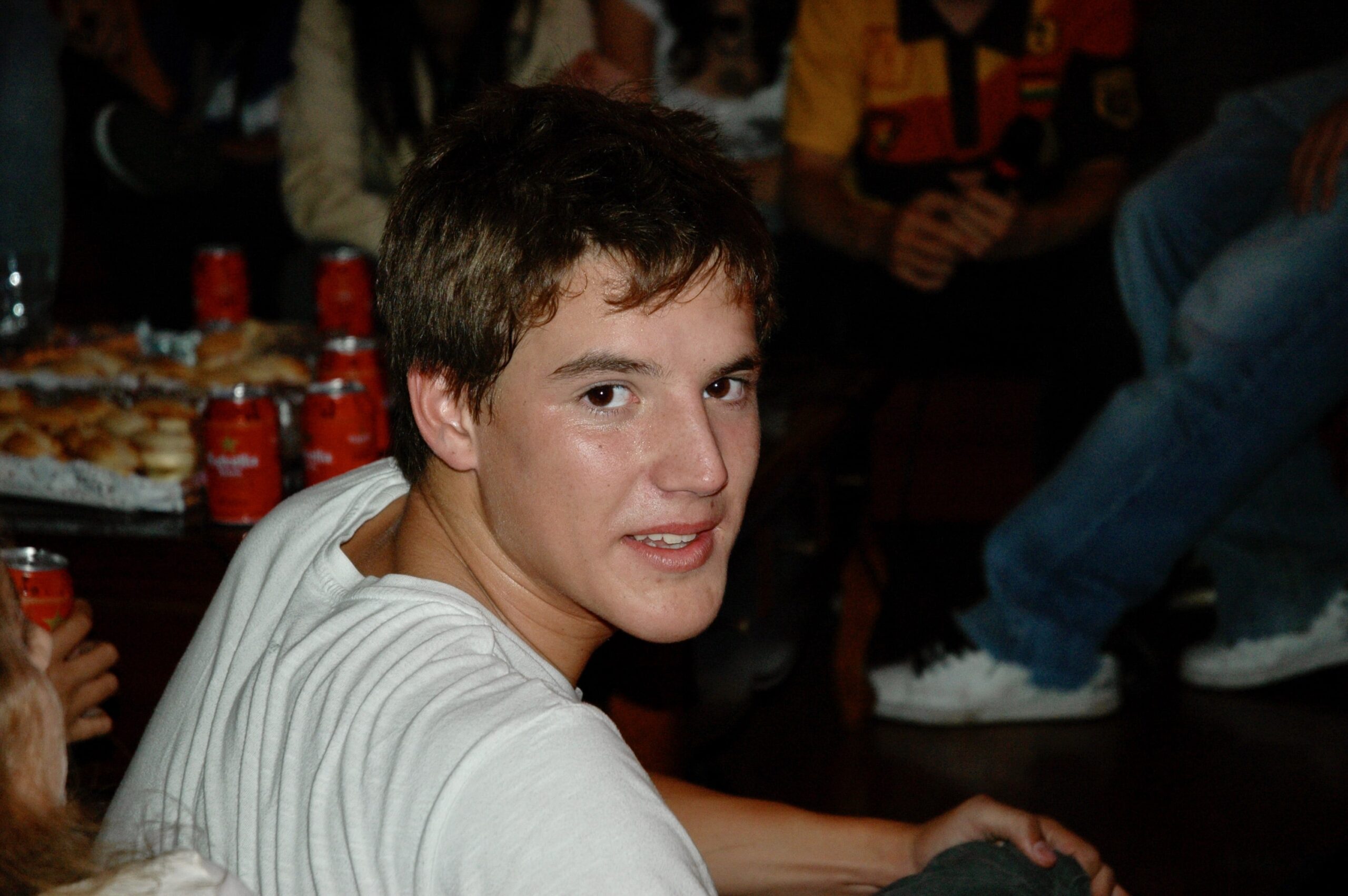
Marcos was at the Spiritual Exercises, the only one who was not a priest, and I had been greatly struck by his attentive and fervent passion for Jesus Christ, by the beauty of his «yes» to the vocation he was beginning to follow after graduating in Physics. He radiated a predilection of the Lord, like John, the «disciple whom Jesus loved», and he passed on that sense of predilection to everyone. All the testimonies about him that are being heard these days confirm what I felt during the Exercises. On the very evening of the day we finished the Exercises, the memorial of Our Lady of Lourdes, Marcos entered the seminary in Barcelona. The next day he wrote me an email to thank me, to ask me never to go to Catalonia without our meeting, and to promise me his prayers for my ministry. But above all, in that message he told me about a small experience he had had that morning, which he presented as an example of how to transpose into his daily life a point I had insisted on during the Exercises: «Your talks are already accompanying me in the first difficulties of seminary life. All of a sudden I face them with a more positive outlook; we must pray that it continues like this. Like when I got out of the shower this morning: there are only 2 minutes of hot water, and my room is the north pole. So I got out of the shower at 6:45 in the morning with an initial reaction of anger, but at that moment I remembered the «patiences» and these words came to my mind, as if Christ himself were saying them to me: «But didn’t you want to give me your life? And isn’t this part of the way you are given to give it to me?», and I lived it gladly». (12.02.2015)
«But didn’t you want to give me your life? And isn’t this part of the way you are given to give it to me?»
This sentence of Marcos’s — now that, only nine days after he wrote it, Jesus has mysteriously and totally accepted the gift of his life, to which he was already consenting in the almost ridiculous banality of everyday circumstances, such as a cold shower — continually accompanies me and helps me to have with circumstances a relationship that transforms their meaning, and that converts me, at least as contrition of heart for so many, so very many circumstances, so many encounters, in which I forget to see and to live an opportunity to give my life to Christ, to love Christ, to let Christ take my life, not in dreams, but precisely in the fleshly reality of life. This sentence reveals, just as Marcos said, the secret of a life full of gladness: not because the circumstance is different from what it is, not because the shower water miraculously becomes hot, but because every banal circumstance can become an opportunity for the fulfilment of life in self-giving to the Lord. Marcos’s thought rather imposes itself on me as a «key for transposing» the life of a saint into our own life. The inheritance of the saint that can become greater fullness of life for us is the witness and the method of his offering. We are not called to imitate everything a saint did and lived. But we must discern, at the heart of all that a saint did and lived, the beating heart of his offering to the Lord, that small or great yes to Jesus which in every circumstance, banal or tragic, asks you point-blank: «But didn’t you want to give me your life? And isn’t this part of the way you are given to give it to me?». It is this leap of freedom in love for Christ within the present circumstance that is the living and life-giving inheritance of the saints which each one of us receives. It is the inheritance of Christ dead and risen which each one of us receives, and which every member of Christ continues to pass on.
Original text in Italian
Marcos era presente agli Esercizi, l’unico non sacerdote, e mi aveva molto colpito la sua passione attenta e fervente per Gesù Cristo, la bellezza del suo «sì» alla vocazione che iniziava a seguire, dopo la laurea in Fisica. Irradiava una predilezione del Signore, come Giovanni, il «discepolo che Gesù amava», e trasmetteva questo senso di predilezione a tutti. Tutte le testimonianze su di lui che risuonano in questi giorni confermano il sentimento che avevo durante gli Esercizi. La sera stessa del giorno in cui avevamo finito gli Esercizi, memoria della Madonna di Lourdes, Marcos entrava nel seminario di Barcellona. Il giorno dopo mi ha scritto un messaggio e-mail, per ringraziarmi, per invitarmi a non mai andare in Catalogna senza incontrarci, per promettermi la sua preghiera per il mio ministero. Ma soprattutto, in questo messaggio mi comunicava una piccola esperienza che aveva vissuto la mattina e che lui presentava come esempio di trasposizione nella sua vita quotidiana di un punto su cui avevo insistito durante gli Esercizi: «Le sue lezioni mi stanno già accompagnando nelle prime fatiche in seminario. Di colpo le affronto con una prospettiva più positiva; bisogna pregare che continui così. Come uscendo dalla doccia questa mattina, ci sono solo 2 minuti di acqua calda, e la mia camera è il polo nord. Così sono uscito dalla doccia alle 6:45 del mattino con una prima reazione di rabbia, ma in quel momento mi sono ricordato delle «pazienze» e mi è venuta alla mente questa parola, come se Cristo stesso me la dicesse: «Ma non desideravi darmi la vita? E questo non fa parte della forma che ti è data per darmela?», e l’ho vissuto con gusto.» (12.02.2015)
«Ma non desideravi darmi la vita? E questo non fa parte della forma che ti è data per darmela?»
Questa frase di Marcos, ora che solo dopo nove giorni che l’aveva scritta Gesù ha accolto misteriosamente e totalmente il dono della sua vita a cui già consentiva nella banalità quasi ridicola delle circostanze quotidiane, come una doccia fredda, questa frase ora mi accompagna continuamente e mi aiuta ad avere con le circostanze un rapporto che ne trasforma il senso, e che mi converte, almeno come contrizione del cuore per tante, infinite circostanze, tanti incontri, in cui mi dimentico di vedere e vivere un’occasione per dare la vita a Cristo, per amare Cristo, per lasciare che Cristo prenda la mia vita, non in sogno, ma appunto nella realtà carnale della vita. Questa frase svela, appunto come diceva Marcos, il segreto di una vita piena di gusto, non perché la circostanza sia diversa da quello che è, non perché l’acqua della doccia diventa calda miracolosamente, ma perché ogni banale circostanza può diventare occasione di compimento della vita nel dono al Signore. Il pensiero di Marcos mi si impone un po’ come una «chiave di trasposizione» della vita del santo nella nostra vita. L’eredità del santo che può diventare maggior pienezza di vita per noi è la testimonianza e il metodo della sua offerta. Non siamo chiamati a imitare tutto quello che un santo ha fatto e vissuto. Ma dobbiamo discernere al cuore di tutto quello che un santo ha fatto e vissuto il cuore palpitante della sua offerta al Signore, questo piccolo o grande sì a Gesù che in ogni circostanza, banale o tragica, ti chiede a bruciapelo: «Ma non desideravi darmi la vita? E questo non fa parte della forma che ti è data per darmela?». È questo scatto della libertà in amore a Cristo dentro la circostanza presente l’eredità viva e vivificante dei santi che ognuno di noi riceve. È l’eredità di Cristo morto e risorto che ognuno di noi riceve, e che ogni membro di Cristo continua a trasmettere.
Machine translation. If you spot a mistake, do write to us.